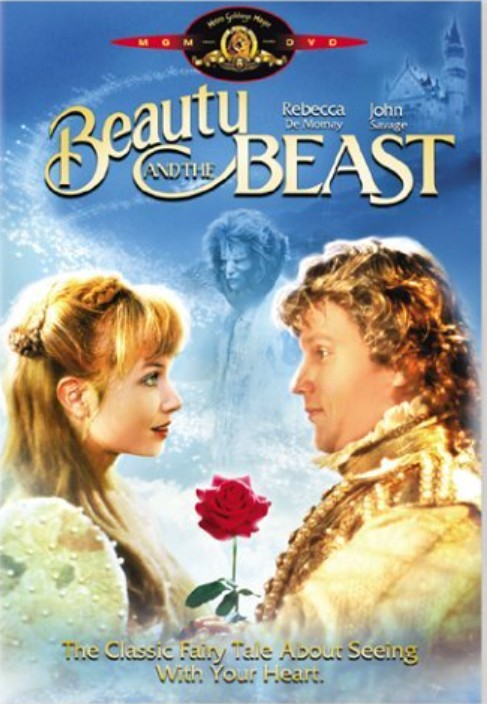
In the 1988 live-action adaptation of Beauty and the Beast, a haunting scene depicts Beauty’s weary father lost in a barren desert after the devastating loss of his ship and wealth, stripped of hope and direction. Starving and near collapse, he discovers a magical palace with doors that open as he approaches, leading him to a courtyard with a three-tiered fountain of cascading water. As he refreshes himself, the palace doors open again, revealing magically prepared food that he eats freely without question. Rested and rejuvenated, he exits, the doors opening effortlessly behind him. Though all within the palace was free, his act of plucking a single rose—a gift his daughter wanted—unleashed consequences, crossing a sacred moral boundary. This small act symbolizes how seemingly insignificant choices can break boundaries and moral limits. The self-righteous leaders were attempting to take ownership of what was rightly God’s (the authority over life and law), and it cost them everything.
“Did not Moses give you the law? Yet none of you keeps the law.”
~John 7:19
The law reveals sin but cannot save; its purpose is to expose our need for grace.
In this passage, Jesus is speaking at the Feast of Tabernacles, a highly religious festival centered on God’s provision and on the law of Moses, which the people prided themselves on. Jesus interrupts their religious celebration with a piercing question. “Did not Moses give you the law?” was not a random statement; He was preparing to expose the intentions behind their actions. They were practicing outward religion while inwardly rebelling. He knew they were hostile toward Him because He’d healed a man on the Sabbath. Yet while they deemed Him a lawbreaker, He was pointing out that their intentions to “murder” Him also ran contrary to the law of Moses, which they treasured so highly. Their self-righteousness was being unmasked; caught up in the letter, they missed the spirit of the law.
The law was there to point out sin, but it couldn’t save us; it only exposed our need for a Savior. Its function was like that of a mirror, only to show our blemishes we would otherwise ignore and gloss over. We could only ever be justified by faith. Jesus wasn’t condemning the law; instead pointing out that people were misusing it, parading it as a trophy, rather than receiving it as a teacher. The truth is, even if a person kept the whole law but stumbled at only one point, they’d still be guilty of missing it all. No one, not even the most religious person we know, escapes the requirement of this standard, proving all under sin. Jesus wasn’t just exposing their failure; He was revealing Himself as the solution as the fulfillment they needed.
Today, we often reduce morality to a checklist: “If I don’t steal, go to church, pay my tithes, pray before my meals, I should be good!” But that mirrors ancient Israel’s mindset; while they were claiming to keep the law, they were planning a murder. The truth is, we all fall short. The rise of performance Christianity, where success is measured by showing up at church, following bible-reading plans, and using religious language, misses the heart of this question. In our hyper-achievement society, grace feels too easy and failure feels like utter defeat. The law wasn’t a ladder to be climbed, but a pointer to the one who fulfilled it. The law reveals, however, grace redeems.
You and I will not measure up, I don’t care how hard we try. However, when we realize we can’t fulfill the law, we stop striving and start trusting. We lean in to Jesus, who not only kept the law’s requirements perfectly but fulfilled all its requirements on our behalf. So that every time guilt tries to creep in because we will fail at times, missing the standard, we can pause to ask ourselves, “Was I trying to live by law or grace?” This question should do nothing more than lead you back to Jesus, not into deeper self-effort. The law was meant to humble us, but Grace lifts us, empowering us to now genuinely live out the spirit of the law: Love. This is the heart of kingdom living.
Time of Reflection:
** The law shows us the standard, but never gives us strength to meet it.
** Grace becomes necessary when the law becomes impossible.
Heart-Probe moment:
** Am I relying on my ability to do good, or am I resting in Jesus, the only One who ever truly kept the law?
Closing prayer:
Jesus, thank You that when I was at my worst, lost in sin, You came to make full restitution on my behalf so that I could have a seat at the table in the kingdom of God. Thank You for the finished work on the cross, teach me to value the fact that You paid such a high price with my lifestyle, but never to confuse it with earning through performance. Lead me into this deeper freedom that comes from the grace You made available. Amen
References:
John 7:19
Rom 13:8-10
Gal 5:14
Matt 5:21
Chronological Bible placement of this text: Q 49